
How OJT Logbooks Help Apprentices Get Certified Faster
In skilled trades, getting certified isn’t just a formality—it’s a ticket to better job opportunities, higher wages, and career growth. But for many apprentices, the certification process can be slow and uncertain, especially when tracking skills and training hours is inconsistent.
There are many ways apprentices can approach certification, but OJT logbooks offer a particularly effective and efficient method.
One key benefit of using OJT Logbooks is that they provide clear advantages for both apprentices and employers by making progress easy to track and ensuring all required skills are documented.
That’s where an OJT Logbook makes a difference. By providing a structured, verified record of on-the-job training, OJT Logbooks help apprentices get certified faster, more efficiently, and with greater confidence.

Introduction to OJT Logbooks
On-the-job training (OJT) is a vital part of building a successful career in the skilled trades, giving learners the chance to develop valuable skills directly in the workplace. OJT logbooks are crucial tools in this process, serving as a structured record of the tasks completed, skills gained, and progress made throughout training. By documenting each step of their journey, learners can clearly see how their skills are developing, which competencies they have mastered, and where they need to focus next. This not only helps apprentices track their progress but also supports them as they pursue new opportunities in their chosen trades.
The importance of OJT logbooks lies in their ability to provide a clear, organized overview of a learner’s development, making it easier to assess competency and plan for future growth. As a result, OJT logbooks are essential for anyone looking to succeed in skilled trades and build a rewarding career.

Why Apprentices Need Structured Skill Tracking
Certification bodies and apprenticeship programs typically require:
A certain number of hands-on training hours
Completion of specific competency tasks
Supervisor validation of skills demonstrated
Structured logbooks help apprentices and supervisors track progress and assess skills more effectively, highlighting the importance of accurate documentation for successful training and certification.
Without a clear, organized way to track this, apprentices often face:
Delays in getting their hours verified
Missing or incomplete records
Repeating tasks due to poor documentation
Longer waits for certification approval
Accurate recordkeeping is of critical importance, as it ensures timely certification and allows both apprentices and supervisors to properly assess and track progress throughout the training process. Both apprentices and supervisors are responsible for maintaining accurate and up-to-date logbook records.
Pre-Apprenticeship Programs and Preparation
Pre-apprenticeship programs are a crucial first step for anyone looking to pursue a career in the skilled trades. These programs are designed to help students develop valuable skills through a combination of classroom learning and hands-on training, giving them a solid foundation before entering a formal apprenticeship. By participating in pre-apprenticeship programs, students gain essential knowledge and practical experience under the guidance of experienced trainers, which is vital for both knowledge retention and skill development.
School programs and partnerships play a key role in preparing students for pre-apprenticeship and skilled trades careers, providing important pathways and support within the education system. This early exposure to real job tasks and workplace expectations helps learners understand the basics of their chosen trade, making the transition into an apprenticeship smoother and more successful. With a strong start in pre-apprenticeship training, students are better equipped to succeed in their apprenticeships, develop the skills employers are looking for, and build a rewarding career in the trades.
On the Job Training and Logbooks
On-the-job training is an essential component of many pre-apprenticeship programs, offering learners the chance to gain hands-on experience and develop new skills in real-world settings. Logbooks play a critical role in this process by allowing learners to record their daily activities, track their progress, and reflect on what they have learned. This combination of OJT and logbook use leads to better knowledge retention, as learners can revisit their experiences and reinforce their understanding of key concepts and techniques.
Additionally, logbooks increase accountability by providing a transparent record of training, making it easier for both learners and trainers to monitor development and ensure that all required skills are being addressed. By supporting skills development and helping learners understand the essential requirements of their trade, logbooks are a valuable tool for anyone participating in pre-apprenticeship programs or beginning their journey in the skilled trades.
Formal Training and OJT Logbooks
While formal training lays the groundwork by teaching the basics of a trade in a classroom or workshop setting, combining it with on-the-job training and logbooks creates a more comprehensive learning experience. OJT logbooks bridge the gap between theory and practice, allowing learners to apply what they’ve learned in formal training to real job tasks and document their progress along the way. This blended approach helps learners develop a deeper understanding of the skills, knowledge, and responsibilities involved in their chosen trade. By regularly recording their experiences and achievements, learners can see how their formal education translates into practical skills, making it easier to identify strengths and areas for further development. The benefits of integrating formal training with OJT logbooks include a more well-rounded education, greater confidence on the job, and a clearer path to mastering the competencies required for success in the skilled trades.
How OJT Logbooks Speed Up Certification
An OJT Logbook—especially a digital one—solves these issues by:
Providing a clear, standardized record of tasks completed and skills acquired.
Allowing both apprentices and supervisors to track progress in real time.
Making it easier to identify gaps in training and address them promptly.
Ensuring compliance with regulatory requirements and industry standards.
Implementing OJT logbooks as part of a comprehensive apprenticeship strategy helps standardize training and accelerate certification timelines.
All parties involved in the apprenticeship process benefit from the transparency and structure provided by OJT logbooks.
1. Tracking Hours in Real Time
Apprentices accurately record the time spent on each task as they complete them, reducing backlogs and ensuring accuracy.
2. Verifying Competencies On the Spot
Trainers or supervisors can validate tasks immediately, eliminating the risk of forgotten or unverified skills. Trainers can also assess the apprentice's competency at the time of verification, ensuring that skills are properly evaluated as they are demonstrated.
3. Organizing Training by Competency
Logbooks categorize skills by trade requirements, ensuring apprentices are covering all necessary competencies for certification. This organization also helps clarify the responsibilities apprentices must fulfill for certification.
4. Generating Reports for Certification Bodies
Apprentices can easily export a complete record of their progress, which simplifies submissions for certifications or licenses. In many cases, submitting these reports is a mandatory requirement for certification or licensing authorities.
5. Boosting Accountability
Both apprentices and employers stay aligned on what’s completed, what’s pending, and what’s required—keeping the certification process on track.
Maintaining accountability is critical to ensuring apprentices stay on track for certification.
Skills Development through Logbooks
Logbooks are a powerful resource for supporting skills development throughout an apprenticeship or training program. By consistently tracking their progress, learners can identify areas where they excel and pinpoint skills that need further improvement. The process of recording tasks and reflecting on experiences encourages critical thinking and self-assessment, which are essential for continuous improvement. Logbooks also help learners develop valuable skills such as time management and organization, as they must regularly update their records and set goals for future development. The importance of logbooks in skills development cannot be overstated—they provide a roadmap for growth, foster accountability, and empower learners to take charge of their own professional development. By making reflection and goal-setting a regular part of the training process, logbooks help ensure that apprentices are always moving forward and building the skills needed for long-term success.
The Role of Employers and Sponsors
Employers and sponsors are vital partners in the apprenticeship process, playing a key role in helping apprentices develop valuable skills and competencies through on-the-job training. By providing real-world job experiences, employers enable apprentices to learn new skills and apply their training in practical settings. This not only benefits the apprentices, who gain hands-on experience and guidance from trainers and mentors, but also helps businesses build a skilled workforce tailored to their specific needs. Businesses benefit from developing internal talent through apprenticeship programs, which reduces the need to hire externally and lowers recruitment costs. Employers who invest in apprenticeship programs often see improved productivity, higher employee retention, and a more competitive edge in their industry. Organizations play a crucial role in supporting apprenticeship initiatives and workforce development by facilitating mentorship, implementing training strategies, and collaborating with other stakeholders. By working closely with trainers and educators, employers can create customized training pathways that ensure apprentices are well-prepared to contribute to the workplace and succeed in their chosen profession.
Best Practices for Using OJT Logbooks
To maximize the benefits of OJT logbooks in on-the-job training programs, it’s essential to follow a few best practices. Apprentices should make it a habit to update their logbooks regularly, recording detailed information about the tasks they complete, the skills they develop, and any challenges they encounter. Employers and trainers should review these entries frequently, offering feedback and guidance to help apprentices stay on track and focus on continuous improvement. Apprentices are also encouraged to seek advice from experienced trainers or mentors to maximize the effectiveness of their logbook entries.
Using digital log books can make this process even more efficient, providing easy access to records, simplifying progress tracking, and allowing for real-time updates. By treating the logbook as a living document, both apprentices and trainers can identify areas for further development, celebrate milestones, and ensure that training goals are being met. These best practices help create a culture of accountability and success within apprenticeship programs.
The OJT Logbook Platform Advantage
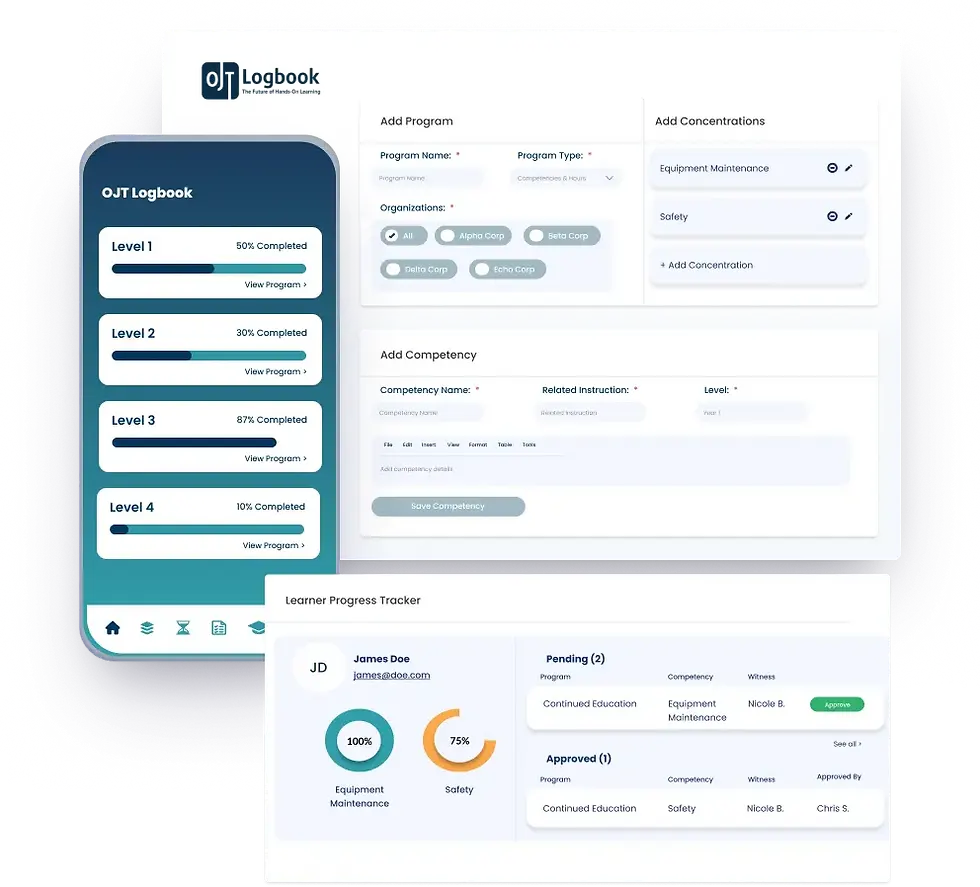
Platforms like the OJT Logbook make this process even faster with features such as:
Pre-built task lists aligned with industry certifications
Digital time tracking and progress dashboards
Supervisor sign-offs directly within the system
Exportable, audit-ready reports
Mobile access for on-site logging
Integrated tools for employees to efficiently manage and track their training records
This means apprentices can spend less time chasing paperwork and more time advancing their careers.
Career Advancement and OJT Logbooks
OJT logbooks are more than just a record-keeping tool—they are a powerful asset for career advancement in the skilled trades and beyond. By carefully documenting their on-the-job training, skill development, and progress toward certification, apprentices can clearly demonstrate their qualifications and commitment to potential employers. This comprehensive record helps apprentices track their journey, identify new opportunities for growth, and pursue additional certifications or advanced roles within their field. Employers can also use OJT logbooks to recognize high-performing apprentices and offer them further training or leadership opportunities. Logbooks help employers train apprentices for advanced roles or leadership positions by providing a structured way to monitor progress and tailor training to organizational needs. With a focus on continuous improvement and skill development, OJT logbooks empower apprentices to succeed in their careers, whether in construction, manufacturing, or other skilled trades, and to thrive in a dynamic and evolving workforce.
Real-World Example
Imagine an apprentice electrician who logs tasks daily, gets them verified weekly, and tracks their competency levels digitally. By completing all required tasks and competencies for certification, the apprentice ensures that when it’s time to apply, all required proof is ready to go, fully documented, cutting down approval time significantly compared to traditional paper logs.

Final Thoughts
Getting certified in a skilled trade doesn’t have to be a drawn-out process. With an OJT Logbook, apprentices gain a faster, clearer path to certification by having their training and competencies accurately tracked and verified.
OJT logbooks play a key role in developing more skilled workers who are ready to meet industry demands. As part of a developed, modern approach to apprenticeship and certification, OJT logbooks help both apprentices and employers achieve their goals more efficiently.
If you’re an employer or apprentice looking to simplify the path to certification, explore how the OJT Logbook can help you streamline the process and build a job-ready workforce.


Comments