
How to Track On-the-Job Training Hours with a Digital Logbook
On the job training hours are a critical component of effective employee training programs. These hours represent the practical, hands-on experience employees gain while performing their job duties under supervision, making them invaluable for skill development and ensuring that training programs align with business goals. Understanding how to track and manage on the job training hours efficiently can significantly enhance the success of employee development initiatives and improve overall workforce quality.
The Importance of On the Job Training Hours in Employee Training Programs
On the job training hours form the backbone of many employee training programs, especially those focused on skill development and practical application. Unlike theoretical training courses or workshops, these hours provide employees with real-world experience, allowing them to apply essential skills in their daily tasks. This hands-on approach not only reinforces learning but also increases employee engagement and retention.
In industries such as skilled trades, registered apprenticeship programs rely heavily on on the job training hours to ensure apprentices acquire the necessary competencies. These programs combine classroom instruction with practical experience, making it essential to accurately track and verify hands on hours to measure progress and compliance.
Tracking Employee Training and Progress Effectively
Tracking employee training is vital for organizations aiming to maintain a complete training history and monitor training progress accurately. Maintaining detailed training records allows supervisors and management to evaluate training efforts and outcomes, ensuring that employees meet the required competencies and business standards.
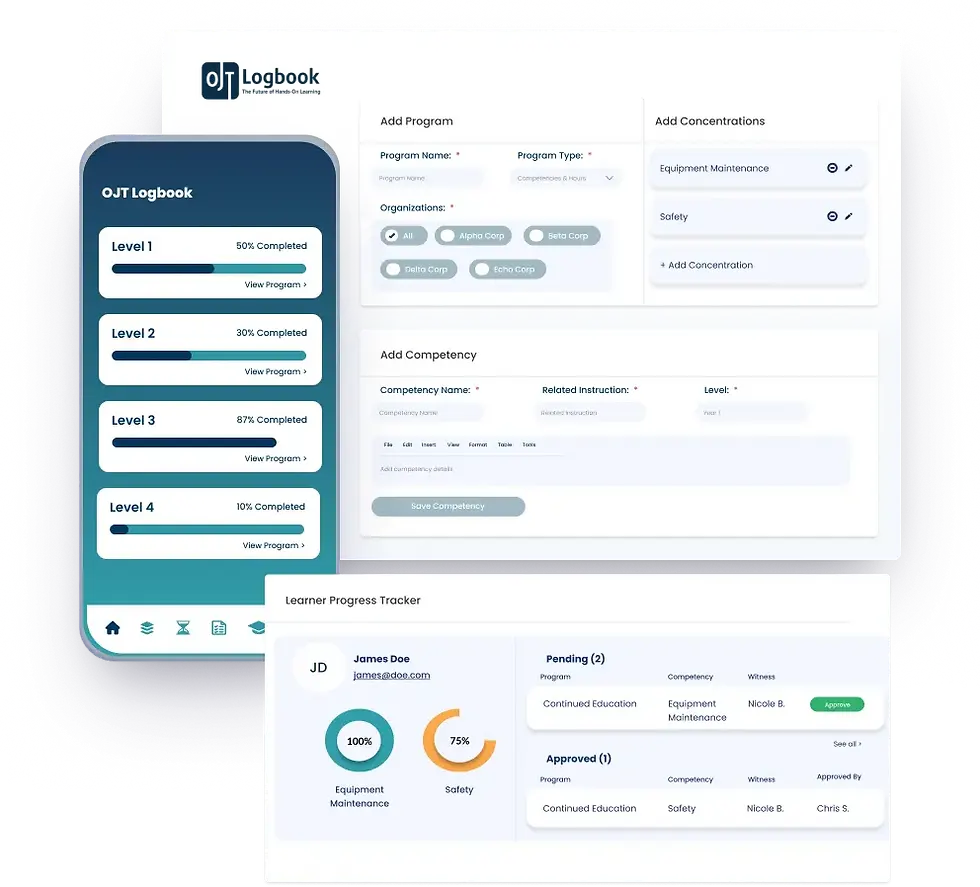
An easy to use system, such as an OJT logbook app, can simplify the process of keeping track of hours and competencies. These tools often feature a user friendly interface, enabling both learners and supervisors to input data effortlessly. By using such tools, companies can save time on paperwork and focus more on supporting employee development.

Benefits of Using an OJT Logbook App for Training Management
Implementing an OJT logbook app offers numerous advantages for organizations managing on the job training hours. This technology facilitates the creation and maintenance of training records, providing instant access to training materials, assessments, and employee feedback. With these resources centralized, tracking hours and evaluating training progress becomes more streamlined.
Moreover, these apps help verify hands on hours, ensuring accountability and compliance with apprenticeship program requirements. The ability to track completion rates and training outcomes allows companies to measure the effectiveness of their training courses and make data-driven decisions to enhance future programs.

Enhancing Skill Development Through Structured Training Programs
Structured training programs that incorporate on the job training hours are essential for developing a competent and skilled workforce. By focusing on repetitive tasks and essential skills, these programs help employees build confidence and proficiency in their roles. The combination of hands-on experience and formal training courses promotes continuous learning and growth.
Organizations that prioritize employee development through comprehensive training efforts are better positioned to meet customer demands and achieve business success. Tracking employee progress and providing timely support ensures that learners stay motivated and on track to complete their training goals.
Meeting Specific Needs with Customized Training Solutions
Every company has unique training requirements based on its industry, team, and business objectives. Customized training programs that address these specific needs are more effective in developing relevant skills and competencies. By leveraging tools like OJT logbook apps, supervisors can tailor training materials and workflows to suit their organization's context.
This personalized approach not only improves the quality of training but also enhances learner engagement and satisfaction. When employees see that their training aligns with their career goals and company expectations, they are more likely to invest the necessary hard work to succeed.

Conclusion: The Future of Employee Training and Development
On the job training hours are indispensable for building a skilled and adaptable workforce. By effectively tracking and managing these hours through user friendly systems like OJT logbook apps, organizations can optimize their employee training programs, improve compliance, and achieve better training outcomes. Investing in comprehensive training efforts that combine practical experience with structured learning ensures that employees develop essential skills, contributing to the long-term success of the company.
As businesses continue to evolve, embracing innovative tools and strategies for tracking employee training will be crucial. This focus on continuous improvement supports not only individual employee progress but also the overall quality and competitiveness of the workforce, ultimately benefiting customers and driving organizational growth.
To see how the OJT Logbook can help streamline your training process and improve workforce readiness, visit ojtlogbook.com.


Comments