
OJT Logbook for Employers: Streamlining Workforce Development and Apprenticeship Programs
In today’s competitive business landscape, companies are increasingly focusing on developing a skilled workforce to meet evolving industry demands. One effective way to achieve this is through apprenticeship programs supported by an efficient OJT logbook for employers. This tool plays a crucial role in managing participants, tracking progress, and ensuring compliance throughout the training journey. In this article, we will explore how employers can leverage OJT logbooks to enhance workforce development, simplify manual processes, and ultimately drive measurable outcomes.
The Importance of an OJT Logbook for Employers
An OJT logbook for employers serves as a central platform to document and monitor the hands-on training that job seekers and employees undergo during apprenticeship programs. This logbook is essential for verifying hands-on hours, which is a critical component in assessing a learner’s ability and competencies. By maintaining accurate records, employers can ensure compliance with industry standards and regulatory requirements, reducing the risk of discrepancies during audits or evaluations.
Moreover, the OJT logbook helps employers focus on the skills development of their team by providing a clear overview of each participant’s progress. This transparency allows companies to identify areas where additional support or training may be needed, fostering a culture of continuous learning and improvement. Ultimately, an effective OJT logbook contributes to producing job-ready employees who can confidently meet the needs of customers and the business.
Enhancing Apprenticeship Programs with Technology
Traditional manual processes for managing apprenticeship programs can be time-consuming and prone to errors. Many companies still rely on paper-based logs or spreadsheets, which complicate tracking and reporting. To address these challenges, employers are turning to digital solutions, such as an OJT logbook app, to streamline the entire process.
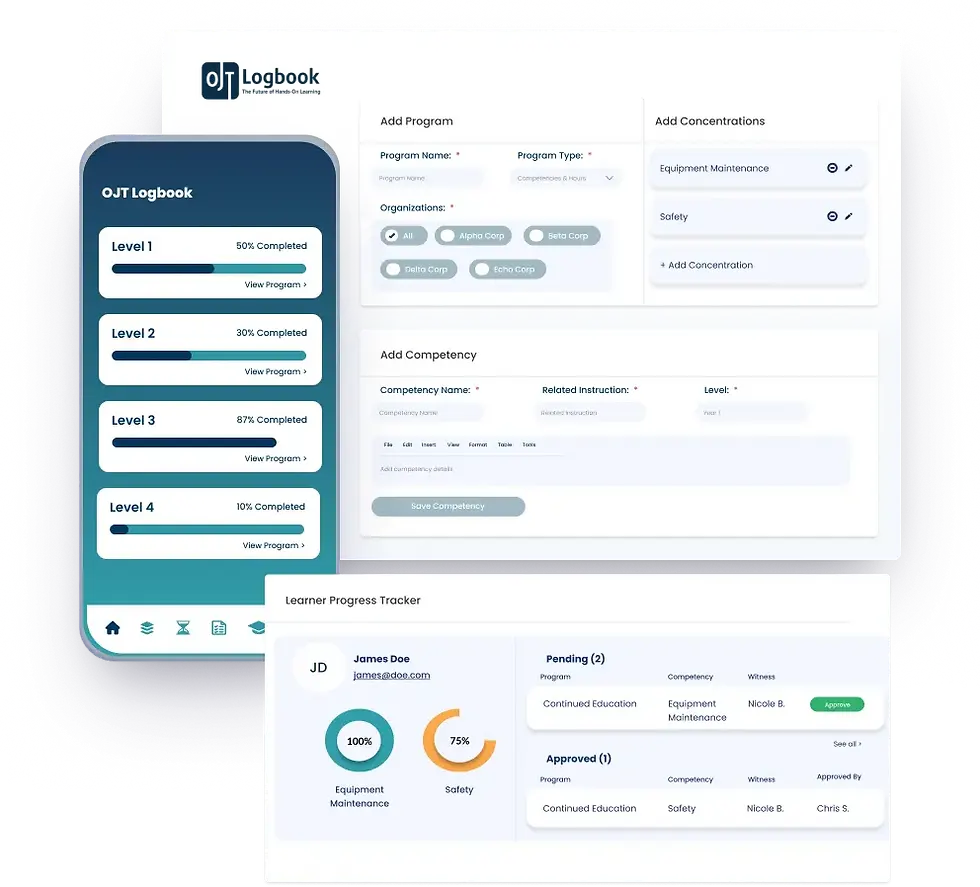
An OJT logbook app offers a one-system approach that integrates all aspects of training management. This platform allows employers to easily track skills acquisition, document competencies, and manage workforce development efforts in real-time. The app’s reporting features provide valuable data insights, enabling companies to measure success and make informed decisions about future updates to their programs.
By adopting such tools, businesses can improve efficiency, reduce administrative burdens, and enhance the overall experience for both learners and trainers. This digital transformation aligns with the mission of many organizations to build a future-ready workforce equipped with the necessary skills and knowledge.
Managing Participants and Tracking Progress
Effective management of apprenticeship program participants is vital to achieving desired outcomes. An OJT logbook for employers facilitates this by offering comprehensive tracking capabilities. Employers can monitor individual progress, ensuring that learners meet the required competencies and complete the necessary hands-on hours.
This level of oversight helps companies maintain compliance with training standards and regulatory guidelines. Additionally, it supports workforce development by identifying skill gaps early, allowing for timely interventions. Employers can allocate resources more efficiently, focusing on areas that will yield the greatest impact on employee growth and business success.
Furthermore, the ability to generate detailed reports through the OJT logbook platform enhances communication between management, trainers, and learners. Transparent reporting fosters accountability and encourages a collaborative approach to skills development, ultimately benefiting the entire team.
Supporting Workforce Development and Business Growth
Investing in an OJT logbook for employers is not just about managing training; it is a strategic move to support long-term workforce development and business growth. Skilled trades and technical roles are critical to many industries, and ensuring a steady pipeline of qualified employees is essential for maintaining competitive advantage.
By leveraging the right tools, companies can develop tailored apprenticeship programs that align with their business goals and customer expectations. The OJT logbook acts as a resource that supports continuous learning, enabling employees to acquire new competencies and advance their careers.
Moreover, the data collected through the logbook provides insights into workforce trends and training effectiveness. Employers can use this information to refine their programs, adapt to changing market demands, and prepare their teams for future challenges. This proactive approach helps businesses stay ahead in a dynamic environment while fulfilling their mission to deliver quality service and products.
Conclusion
An OJT logbook for employers is a powerful tool that transforms how companies manage apprenticeship programs and workforce development. By moving away from manual processes and embracing digital platforms like an OJT logbook app, employers can ensure compliance, verify hands-on hours, and track the progress of their learners effectively. This not only enhances the training journey but also drives measurable outcomes that benefit both employees and the business.
Investing in such a system supports the development of a skilled, job-ready workforce capable of meeting future demands. As companies continue to prioritize skills and competencies, the integration of comprehensive management tools will be key to their ongoing success. Ultimately, the right OJT logbook platform empowers employers to focus on what matters most: developing talent, improving performance, and achieving their mission in an ever-evolving marketplace.


Comments